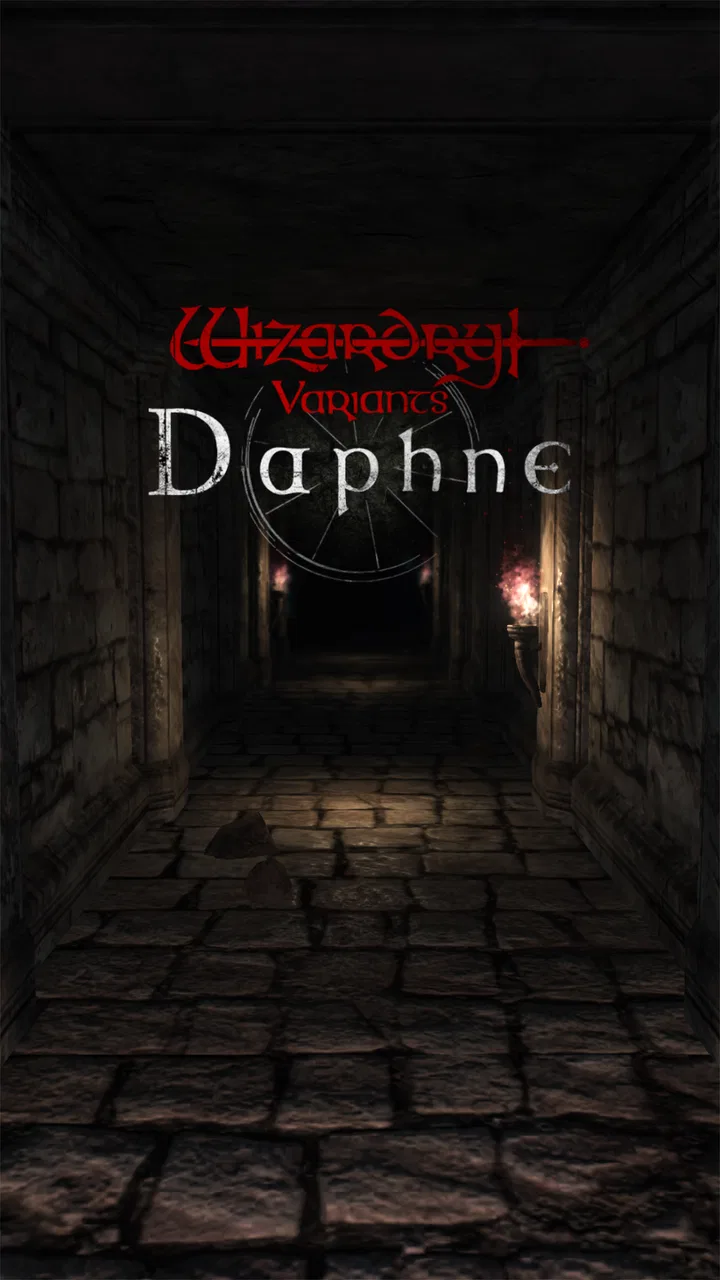
Wizardry Variants Daphne
- 4.3
- Rating
- 1.00M
- Installs
- Free
- Price

 Analysis by App-foxy
I went into Wizardry Variants Daphne expecting a traditional role-playing game with a modern 3D presentation, and that is exactly where its appeal begins. This is not a lightweight game built around quick taps and constant rewards. It asks me to enter dangerous dungeon spaces, make careful decisions, deal with setbacks, and then decide whether the next attempt is worth the risk. That tension gives each session a clear purpose.
Developed by 株式会社ドリコム, the game places its identity firmly in the 3D dungeon RPG tradition. Its world is built around the idea that the Abyss opens once every century, but the more important point for me is how that premise supports the play loop: prepare, descend, investigate, fight, collect what I can, and return with enough progress to justify going deeper. When things go well, I feel clever. When they go badly, I usually understand which choice led me there.
It is free to start, with optional purchases ranging from $1.19 to $119.99 per item. The game is rated Teen, and it requires Android 11 or later. I would describe it as a better fit for players who enjoy methodical dungeon exploration than for anyone looking for a relaxed game to play without reading, planning, or accepting occasional frustration.
You May Also Like

 Blood Strike: 2.5 Anniversary
Blood Strike’s Loadouts Turn Every Drop Into a Tactical Gamble
A close look at Blood Strike’s custom loadouts: how fast access to signature weapons reshapes its battle royale rhythm, rewards preparation, and narrows the gap between fights.

 Pandora - Music & Podcasts
Pandora’s Music Is Easy to Start, but Harder to Recover
Pandora’s strength is its low-effort path from a seed to a station. Its weak spot is how much confidence it asks you to place in connection, setup, and quiet recovery.

 8 Ball Pool
 Is Built on Rivalries, Rematches, and Routine
A close look at the rivalries, rematches, shared routines, and unanswered safety questions that turn a quick pool match into a persistent mobile community.

 Samsung Music
’s Quiet Strength Is Playing What You Already Own
Its reach comes less from spectacle than from dependable access to a personal library. That simplicity is both the app’s strongest retention engine and its ceiling.

 AccuWeather: Weather Radar
AccuWeather Review: A Quick, Clear Forecast for Everyday Decisions
For everyday plans, the best forecast is the one you can understand quickly. AccuWeather makes rain timing, radar, and local conditions easy to act on, with a few trade-offs.

 Hill Climb Racing
Why Hill Climb Racing Still Turns Crashes Into One More Run
A tiny car, a bumpy hill and one more upgrade: Hill Climb Racing keeps resurfacing because its simple chaos makes every near-miss feel personal.
More From Our News Desk
View All News


How the dungeon loop feels in actual play
I focus on how the dungeon’s decisions shape a session, rather than treating each room as a separate fight. In my experience, it helps to decide in advance what would make me turn back; that simple boundary can keep curiosity from turning into an avoidable collapse. The next section looks at how combat and exploration make those choices feel consequential.
The first action is choosing how much danger I am willing to accept
The most important decision in a session is not simply which button to press in combat. It is deciding how far I should push an expedition before returning. The dungeon structure makes that question meaningful because progress and survival are connected. I am constantly weighing the value of one more room against the possibility of losing the benefits of the current run.
That makes the opening moments more deliberate than in many mobile role-playing games. I do not treat the dungeon as a hallway between rewards. I look at the condition of my party, consider whether I have enough resources to continue, and think about whether the next encounter is likely to be manageable. This is one of the game’s strongest qualities: it turns movement into a decision rather than empty travel.
The 3D viewpoint also helps make exploration feel physical. Rooms, corridors, turns, and discoveries have a stronger sense of place than a flat menu-driven map. I found myself paying attention to where I was going instead of simply following a glowing marker. That extra attention can be rewarding, although players who prefer a fast auto-battle routine may find the pace slow.
My practical advice is to treat the first few expeditions as information-gathering trips. Do not measure success only by how many enemies you defeat. Notice which encounters drain the party, which routes feel safer, and how much room you have for mistakes. The game becomes easier to understand once I stop trying to clear everything immediately and start using early attempts to learn the dungeon.
Combat gives immediate feedback, but mistakes stay meaningful
Combat is where the game’s classic dungeon-RPG character becomes most obvious. I have to think about the party as a group rather than relying on one powerful character to solve every problem. Choosing whether to attack, defend, use an ability, or preserve an option for later matters more when the expedition has already consumed time and resources.
The feedback is satisfying because actions have visible consequences. A good decision can stabilize a difficult encounter, while a careless one can leave the party weakened before the next room. I enjoy that relationship between action and result. It makes victory feel earned instead of automatically delivered by a progression bar.
At the same time, the game can be demanding when I want a more forgiving mobile experience. A player accustomed to generous checkpoints may dislike having to repeat part of an expedition after a poor battle. The difficulty is not only about enemy strength; it is also about managing attention. Playing while distracted is more likely to produce a bad decision here than in a simple idle RPG.
One useful habit is to separate emergency actions from routine actions. I try not to spend every valuable ability just because it is available. Keeping a response for an unexpected encounter often matters more than finishing an ordinary fight a little faster. That approach also makes the dungeon feel less like a sequence of isolated battles and more like one connected test of judgment.
The reward is more than a new item
Rewards in this kind of game work on several levels. There is the immediate satisfaction of surviving a fight, the practical value of improving the party, and the knowledge gained from seeing what lies beyond a familiar section. I particularly like the third type because it means a failed run can still improve the next one.
When I return from a dungeon attempt, I do not only ask whether I collected something useful. I ask what I learned. Did I leave too late? Did I spend a resource on a minor threat? Did I underestimate a route? This makes the reward structure feel more personal than a simple chest-opening sequence. The game encourages me to convert mistakes into preparation.
That said, the appeal depends heavily on enjoying gradual progress. If I want every session to produce a dramatic upgrade, the rhythm may feel restrained. The game is more interested in accumulation: a better understanding of the dungeon, a stronger party, and a more reliable plan. Players who prefer immediate spectacle may find the rewards less exciting than those who enjoy building competence over time.
The free-to-play model is also part of the decision. Optional purchases can make the game more appealing to players who want to support it or accelerate certain aspects of their experience, but I would approach the purchase screen carefully. The listed price range is broad, so I would recommend deciding on a personal spending limit before becoming invested in long-term progression. That is especially important in a game whose tension comes from risk and recovery.
Resetting after a failed run is part of the design
The end of a session is not always a clean victory. Sometimes I return because continuing would be reckless; sometimes the dungeon forces the issue. Either way, the reset is meaningful because it gives me a chance to rethink the next attempt. I may change the party’s approach, alter the order in which I handle threats, or simply stop repeating the same mistake.
This is where the game differs from many mobile alternatives that are designed to remove friction between sessions. In a more casual role-playing game, failure can feel like a temporary notification before I collect another reward. Here, failure can make me reconsider how I play. That is more demanding, but it also gives the next session a reason to exist beyond daily habit.
I found the reset loop most enjoyable when I ended a run voluntarily rather than waiting until everything collapsed. Returning while I still had useful resources feels less dramatic, but it protects progress and gives me a clearer baseline for the next attempt. This is a small change in mindset, yet it makes the game less punishing and more strategic.
For an everyday example, I would not start an ambitious descent during a short commute if I knew I might need to stop suddenly. I would use that time for a smaller objective, then reserve a longer, uninterrupted session for exploration. The game rewards attention, so matching the size of the expedition to the time available is sensible. It is not the best choice for someone who needs every session to be safely finishable in a few minutes.
Why another session begins
The reason I start again is not simply that the game tells me to. I usually have one of three motivations: I want to test a new plan, recover from an earlier mistake, or see whether a route I now understand can be pushed further. Those goals are clearer than the vague promise of “more content,” and they keep the loop focused.
The strongest sessions follow a recognizable pattern. I make an initial choice, receive immediate feedback from exploration or combat, gain progress or information, return before the risk becomes unreasonable, and then use that result to shape the next attempt. The reset is not a break from the game’s design; it is the point where the design asks me to learn.
That loop also explains why the game may divide players. Someone who enjoys planning and gradual mastery will likely appreciate the structure. Someone who wants a constant stream of effortless rewards may see the same structure as unnecessary friction. Neither reaction is unreasonable. The game is deliberately closer to a patient dungeon crawl than to a disposable mobile distraction.
Useful habits for new players
I would begin by resisting the urge to explore every available path immediately. A controlled first pass helps me learn the layout and the cost of each decision. Once I know which areas are manageable, I can make later runs more efficient instead of spending resources blindly.
I would also keep a mental note of what caused a failed attempt. “The dungeon was too hard” is not useful enough. A better diagnosis is that I entered a fight while already weakened, used an important ability too early, or continued after the party had lost its safety margin. Specific causes lead to specific improvements.
Another worthwhile habit is to judge progress by reliability, not only depth. Reaching a difficult area once may be exciting, but being able to reach it consistently is more valuable. Reliable routes give me room to experiment later, while reckless breakthroughs can leave me without a stable foundation.
Finally, I would avoid treating purchases as a substitute for understanding the loop. The game’s central satisfaction comes from making better decisions in the dungeon. Spending may change the pace of progression, but it does not remove the need to manage risk. If the planning itself does not appeal to you, paying for faster progress is unlikely to fix the underlying mismatch.
How it compares with easier role-playing games
Compared with the usual mobile RPG, this game feels less like a collection of menus and more like an expedition. Many alternatives emphasize automatic battles, generous rewards, and short daily tasks. Those designs are convenient, especially when I only have a few spare minutes. Wizardry Variants Daphne instead asks me to stay involved, remember what happened, and accept that a run can go badly.
Compared with a traditional console dungeon crawler, it is easier to pick up in short bursts, but the mobile format does not make its decision-making disappear. I can play in smaller sessions, yet I still need to respect the consequences of entering a dungeon without a sound plan. That combination is appealing if I want classic tension with the convenience of a phone.
The trade-off is clear. A more casual game is better when I want relaxation, predictable progress, or a session that never punishes interruption. This one is better when I want my attention to matter. I would recommend it to fans of party management, exploration, and cautious experimentation, but I would steer away players who dislike repetition after failure or who prefer a purely automatic progression system.
Who should install it, and who should skip it
I think it is a good match for players who enjoy asking “what should I do next?” rather than simply following instructions. It suits people who like discovering a route, testing a party, and improving through repeated attempts. It also works for players who want a role-playing game with a stronger sense of danger than the average free mobile title.
I would be more cautious recommending it to someone who wants a story-first experience with minimal mechanical pressure, or to a player who expects every session to deliver a large reward. The Teen rating also makes it more appropriate for older players than for children, and the optional purchase range means families should discuss spending before handing over access to the game.
On Android, the operating-system requirement is Android 11 or later, so I would check compatibility before planning around it. The current version is 1.25.0, and the game has reached over a million installs, with an average rating of 3.9 from around eighty-two thousand ratings and about seven thousand written reviews. Those figures suggest a substantial audience, but they also fit my impression that the game has a specific taste: it is not trying to please every mobile player.
My verdict on the complete action-feedback-reward-reset cycle
What keeps me returning is the connection between each stage. I act by choosing a route or committing to a battle. The game responds quickly enough for me to understand the result. I receive progress, equipment, survival, or useful knowledge. Then I reset, either by returning safely or by accepting a failed attempt, and begin again with a better plan.
That is a stronger foundation than a store summary can communicate. The game’s real character appears in the moments between rewards: deciding whether to risk one more room, preserving an important option, and recognizing when retreat is the smart move. Those choices create the tension that gives the dungeon its identity.
My main reservation is that the same friction can become tiring. Repetition, careful resource use, and the possibility of losing momentum will not suit everyone. The free-to-play structure also deserves deliberate spending habits, particularly because individual purchases can reach a high price. I would not recommend installing it casually if you already know that failure-based loops frustrate you.
For me, though, Wizardry Variants Daphne succeeds when I approach it as a measured expedition rather than a quick reward machine. It is free to begin, visually grounded in three-dimensional dungeon exploration, and unusually good at making the next session feel earned. If you want a mobile role-playing game where preparation, restraint, and learning matter, I think it is worth trying. If you want effortless progress between interruptions, a lighter alternative will probably serve you better.
FAQs for Wizardry Variants Daphne
01What is Wizardry Variants Daphne about?
Wizardry Variants Daphne is a captivating role-playing game that immerses players into a magical world filled with quests, intriguing characters, and strategic battles. Players explore dungeons, collect powerful items, and customize their characters to suit their gameplay style. The game combines classic RPG elements with modern visuals, providing a unique and engaging experience.
02What platforms is Wizardry Variants Daphne available on?
Wizardry Variants Daphne is available on both Android and iOS platforms. This allows a wide range of mobile users to enjoy the game’s rich graphics and immersive gameplay. Ensure your device meets the minimum system requirements for a smooth gaming experience, which can be found on the respective app store pages.
03Are there in-app purchases in Wizardry Variants Daphne?
Yes, Wizardry Variants Daphne offers in-app purchases. These purchases can enhance your gaming experience by providing access to exclusive items, additional quests, or character boosts. While the game is free to download, players can choose to invest in these options to advance more quickly or customize their gameplay.
04How does Wizardry Variants Daphne ensure player progression?
Player progression in Wizardry Variants Daphne is achieved through completing quests, battling enemies, and gathering resources. The game’s leveling system allows players to strengthen their characters, unlocking new skills and abilities as they advance. Regular updates and events also provide new content, keeping the gameplay fresh and challenging.
05Is an internet connection required to play Wizardry Variants Daphne?
An internet connection is required to fully enjoy Wizardry Variants Daphne. While some elements may be available offline, online connectivity ensures access to all features, including multiplayer options, updates, and community events. This connectivity enhances the interactive and competitive aspects of the game, making it more engaging.
Pros
- Engaging storyline with immersive quests.
- High-quality graphics and sound design.
- Intuitive controls for seamless gameplay.
- Regular updates with new content.
- Strong community and multiplayer features.
Cons
- Requires a stable internet connection.
- In-app purchases can be pricey.
- Battery consumption is quite high.
- Occasional lag in crowded areas.
- Limited character customization options.

Wizardry Variants Daphne
Gallery